
Business Valuation by Industry
Providing business valuation services requires a considerable level of expertise and places a responsibility on valuation professionals to effectively communicate the process and outcomes of the valuation in a transparent and accurate manner. Different industries have unique characteristics, growth prospects, and risk factors. Having in-depth knowledge of an industry allows a business valuator to assess how well a particular company is positioned within its sector. This understanding helps in assessing the company’s competitive advantage.
Industry knowledge is integral to the business valuation process because it enables valuers to make informed judgments about a company’s future cash flows, risks, and growth potential. Without this knowledge, the valuation may be less accurate and less useful for making important business decisions.

Valtech Valuation Completes Valuation on Pharmaceutical Business
Valtech’s valuation team has recently completed a valuation for an international pharmaceutical group for its investments in European countries. We are glad to be a trusted valuation firm for delivering valuation opinion to clients from the life sciences and health care industry.
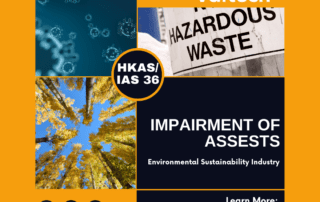
Valtech Valuation Completes Valuation on Environment Hygiene Business
Valtech’s valuation team has recently completed a valuation (impairment assessment) for a listed blue-chip company for its environment hygiene business. We are glad to be a trusted valuation firm for delivering valuation opinion to clients from environmental sustainability industry.

Valtech Valuation Completes Valuation on Gold Mining Business
Looking into the future prospect, Valtech is still in faith that gold mining business shall be prosperous again as inflation around the globe is anticipated in coming years based on economic recovery from pandemic and change of monetary policies, gold price as good investment against inflation shall eventually be grabbing market’s eyeballs and so as the investment opportunity in gold mining business.
Valtech Valuation Received ISO 9001 Certification for Its Quality Management System in Valuation Advisory
Valtech Valuation Advisory Limited, a Hong Kong-based boutique advisory firm, has been accredited ISO 9001:2015 (ISO 9001) Certification for its Quality Management System (QMS), proving its capabilities to deliver quality valuation advisory services. International Organization for Standardization (ISO) is globally recognized for its development and publication on international standards for different industries. ISO 9001 sets out the criteria for a quality management system. Valtech is pleased to announce that it has been awarded the ISO 9001 quality management system certification, the attainment of this certificate reaffirms Valtech' determination in creating an efficient business operation environment for delivering quality valuation services.

Valtech Valuation Completes Valuation on Insurance Business
Valtech’s valuation team has recently completed a valuation for an international bank for its investment in an insurance business. We are glad to be a trusted valuation firm for delivering valuation opinion to banking clients.
SPAC Related Valuation Support
WHAT IS A SPAC? A SPAC (special purpose acquisition company) raises capital through the initial public offering (IPO) for the purpose of acquiring an existing operating company. Generally, a SPAC is formed by a group of sponsors, well-known investors or private equity firms. It
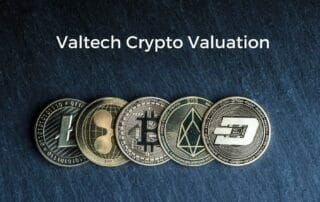
Crypto Asset Valuation
Since different ICO / STO has different characteristics, such as the technology adopted, underlying business that backs the ICO / STO, investment and financing structures etc. Valtech has a professional team which possess valuation expertise across different industries.

Biotech Valuation & Healthcare Valuation Service
Given the uncertainties associated with valuation of biotech enterprises, valuers can put stronger effort in benchmarking. A solid pool of comparable listed companies and comparable transaction will be highly useful to support valuation assumptions at different clinical trial phase.

ESG and Business Valuation
Why Consider ESG in Valuation? Different environmental disasters, social unrest and the governance amid COVID-19 makes ESG reports more important to value a company. In order to increase comparability of ESG reports, different institutions include the IFRS foundation, the CFA Institute and the EFRAG
HKFRS/IFRS 16 – Lease – Impact on Valuation and Discounted Cash Flow
Lessees no longer make a distinction between finance leases and operating leases. All material leases will be treated as finance leases. The lessees will now recognize interest cost and depreciation of the leased asset, rather than operating lease expenses.
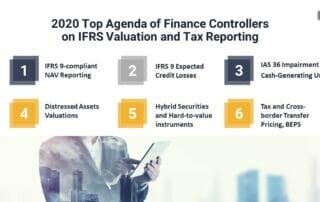
Valtech’s Top IFRS Valuation Agenda in 2020
2020 Top Agenda of Finance Controllers on IFRS Valuation and Tax Reporting and our Innovation for Easier IFRS 9 applications
Goodwill: potential directions of development
The staff of Hong Kong Institute of CPAs and the staff of Accounting Standards Board of Japan (ASBJ) published a research paper (RP), Goodwill: Improvements to Subsequent Accounting and an Update of the Quantitative Study in March 2020. We would like to highlight some
Capital Structure Considerations in Business Valuation
The latest 2020 edition of the International Valuation Standards (IVS) marks an important milestone towards harmonising valuation practice worldwide. Valtech has been closely following the development of IVS. IVS is applicable in many of our valuation engagements looking for consistency and transparency for potential investment decisions.
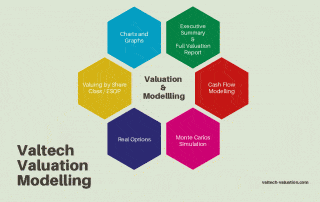
Valuing Private Equity Investments
Business Valuation for Private Equity and Venture Capital (VC) Business valuation consultants play a key role to take the perspective of the private equity firm that is evaluating potential investments. The private equity class stretches from venture capital (VC)—working with early stage companies

Valtech’s Insights in View of the “Statement on the Conduct and Duties of Directors when Considering Corporate Acquisitions or Disposals”
As professional valuer actively involved in valuation advisory for corporate transactions, we would like to share our views and insights to financial advisors and listed companies in response to the key highlights from the SFC’s article in relation to valuation. Basically, we recommend adopting a clear decision analysis and process overview in each valuation of corporate transactions.
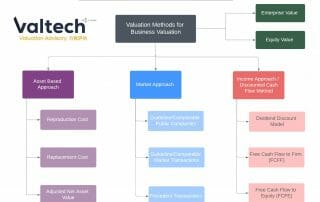
Valuation Methods for Business Valuation
When valuing a company on going concern basis, there are three main valuation methods used by industry practitioners in banking and finance and also valuation specialist: (1) discounted cash flow model, (2) comparable company analysis, and (3) asset-based method. These are the most common methods of valuation used in investment banking, equity research, private equity, corporate finance, mergers & acquisitions (M&A), leveraged buyouts (LBO) and financial reporting.
Purchase Price Allocation (PPA)
With respect to the assignment of goodwill and other asset values, valuations for financial reporting purposes involve the allocation of asset values at the reporting unit level, and the acquired assets can be added to an acquirer’s existing reporting units. Book values of assets and liabilities are often different from their fair values. In allocating the purchase price to these assets and liabilities, we step, or write, them up/down to reflect their fair values.

Business Valuation in Hong Kong
The demand for business valuation in Hong Kong has been growing steadily over the years along with the growth of the number of listed companies in Hong Kong. Listed company requires business valuation to fulfill the requirements of fair value accounting. Business valuers or

Business Valuation
Valuing Your Business Is More Art Than Science Business valuation is a process and a set of procedures used to estimate the economic value of an owner's interest in a business. Valuation is used by financial market participants to determine the price they are

