
Latest News

Convertible Bonds – Practical Valuation and Accounting Insights
Valtech bridges model assumptions and market reality for convertible bonds valuation, resolving challenges of Day-1 gains and losses to deliver fairer, market-reflective insights.
Valtech Helps you Navigate LSP Valuation in a Volatile Economy
Discover how Valtech's advisory services can help you navigate LSP valuation amidst economic fluctuations.
Valtech Valuation Completes Equity Investments Valuation for a PE Fund
Discover how Valtech Valuation provides expert analysis for PE funds, focusing on the critical aspect of equity investments.

Valtech Provides Valuation Service of Biological Assets (IAS 41)
Discover the principles of valuing biological assets under IAS 41 and how it impacts financial reporting and agricultural practices.
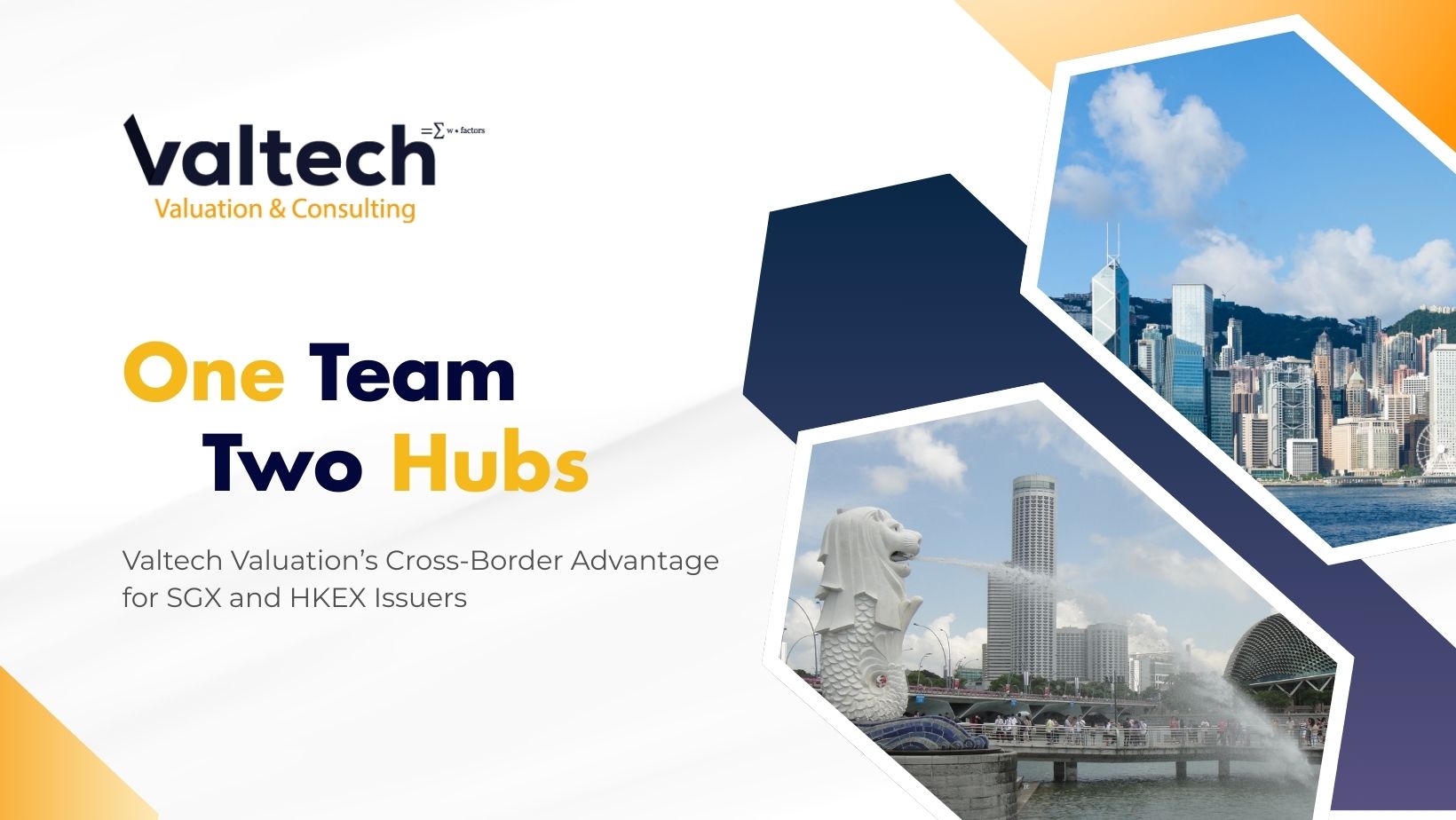
One Team, Two Hubs: Valtech Valuation’s Cross-Border Advantage for SGX and HKEX Issuers
One team, two hubs: Valtech delivers seamless, fast valuations for SGX & HKEX issuers across Singapore, Hong Kong, and China.
Discussion on Using International Default Statistics for ECL Assessment of “Other Receivables” in Hong Kong / PRC
The Key Points to Note if Your PDs are Derived from International Credit Rating Agencies Annual Default Study